
Detection Playbook
Developed in collaboration with leading clinicians, the
Playbook equips you with proven, actionable strategies you can use
to operationalize guideline-aligned detection of Alpha‑1.
XX pages
DOWNLOADI’m thrilled to see the growing resources and focused energy to help support detection efforts.
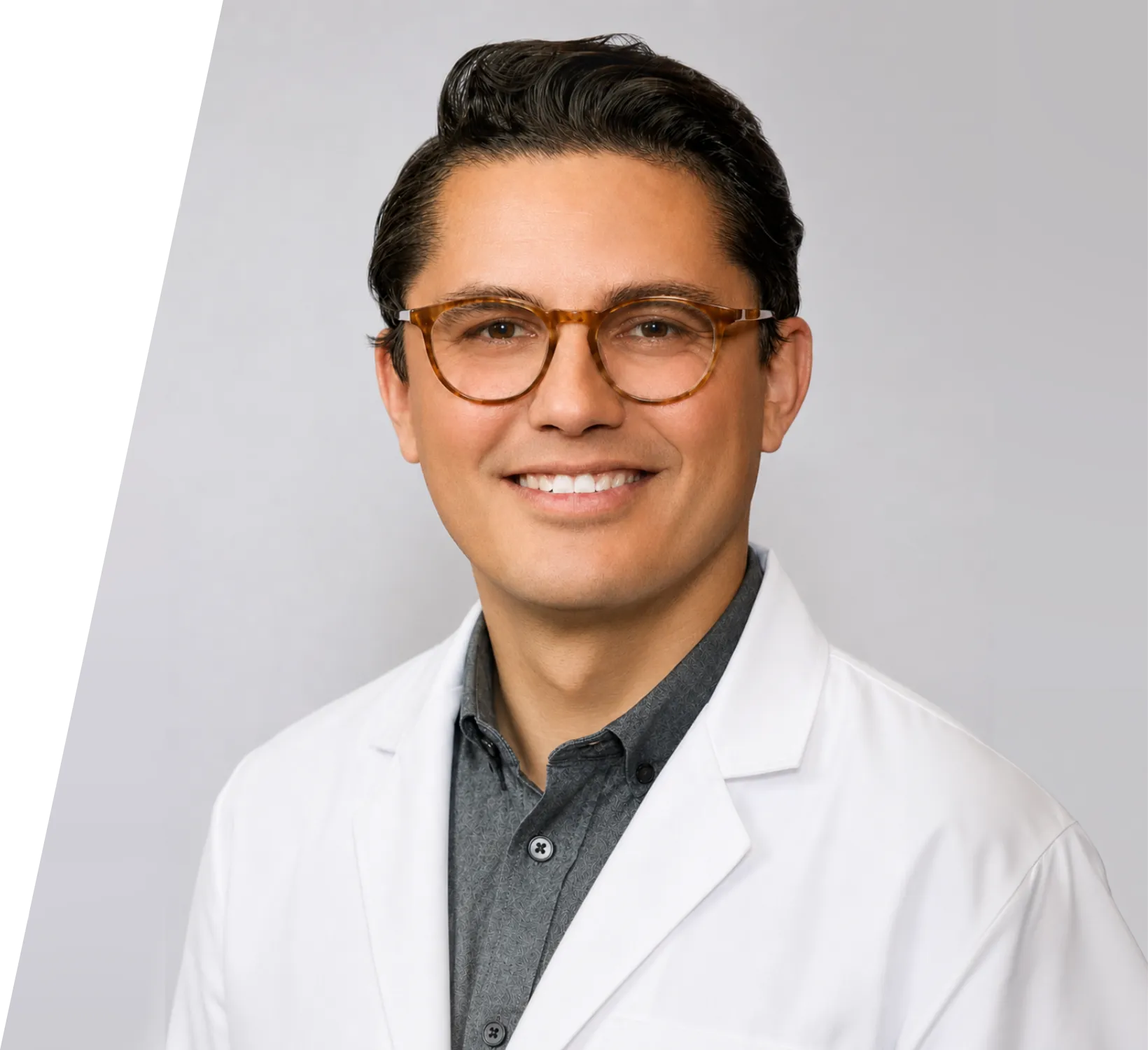
Helpful resources to support your Alpha‑1 detection efforts and those you identify as at risk
AlphaDetect is a non-profit subsidiary formed and wholly owned by the Alpha‑1 Foundation (A1F) to uncover people genetically at risk for Alpha‑1 Antitrypsin Deficiency (Alpha‑1). AlphaDetect is a beneficiary of A1F funding and is recognized by the Internal Revenue Service as a tax-exempt organization under 26 U.S.C. § 501(c)(3).
In addition, AlphaDetect provides a seamless point of entry into A1F and its comprehensive resources, information, and support for providers and people identified at risk for Alpha‑1.
AlphaDetect works with healthcare providers and their teams to remove barriers to adopting routine Alpha‑1 detection. We’re equipping healthcare providers with the tools, resources, and protocols needed to identify individuals at risk for Alpha‑1. Our services are aligned with clinical practice guidelines and integrate into clinical workflows at both the practice and institutional levels. These include:
AlphaDetect testing is available throughout the United States, including Puerto Rico, except in California, Maryland, New York, Pennsylvania, and Rhode Island. These states require additional laboratory licenses and/or test approvals before we can process specimens from their residents. AlphaDetect will apply for the required approvals as soon as we are eligible.
We anticipate testing will become available in California, Maryland, Pennsylvania, and Rhode Island in 2027. New York is expected to take longer.
Internationally, Alpha‑1 detection and testing programs vary by country and healthcare system. Non-U.S. healthcare professionals seeking testing guidance should consult the European Respiratory Society (ERS) for pulmonology or the European Association for the Study of the Liver (EASL) for hepatology.
No. There is no cost. Both kits, genetic testing, the report, and the option to speak with our medical director are provided for free. Postage to return samples is also pre-paid. Nothing provided is eligible for patient or insurance billing.
AlphaDetect tests for the four most common deficient alleles: Z, S, F, and I, in addition to M, the normal allele. Learn more
The Cheek Swab Kit uses a saliva sample and reports the patient’s genotype.
The Finger Stick Kit uses a dried blood spot sample and reports the patient’s genotype and alpha-1 antitrypsin (AAT) level. Targeted next-generation sequencing may be used as a reflex test when there is a low AAT level and genotyping does not detect a deficient allele.
Both kits:
Reports are sent to healthcare providers via eFax within 7–10 business days after a sample is received at our Alpha‑1 dedicated lab in North Carolina. Reports are also available through the AlphaDetect website portal.
Our Customer Care Center is happy to answer questions about the status of your kit. Live assistance is available Monday–Friday from 9AM–7PM ET at 877-837-8421. If you call after hours, please leave a message and someone will return your call within 1 business day.
Yes. Patient information is kept in the strictest confidence by our lab. Only the healthcare provider who sent in the kit will have access to the corresponding report. The provider can then share the results and their meaning with their patient.
The analytical sensitivity and specificity of AlphaDetect’s genotyping test are greater than XX%.
If your kit or any component is damaged, please do not discard any part of the kit. Keep the kit and the damaged item available when you contact us.
Please call our Customer Care Center at 877-837-8421 to speak with someone live, Monday–Friday from 9 AM–7 PM ET. If you call after hours, please leave a message and someone will return your call within 1 business day.
Patients or family members are not currently able to directly order an AlphaDetect kit at this time. AlphaDetect kits are only available to healthcare providers with an NPI number.
The Alpha‑1 Foundation (A1F) provides free, confidential, direct-to-patient genetic testing through the Alpha‑1 Coded Testing (ACT) Study, in partnership with the University of Florida. Please direct anyone interested in directly ordering a free kit to the testing & diagnosis page at a1f.org under the ‘About Alpha‑1’ tab.

XX pages
DOWNLOADXX pages
DOWNLOAD
The Alpha‑1 Foundation (A1F) provides healthcare providers across lung and liver specialties with trusted information on Alpha‑1, diagnosis, research and care, as well as resources to support patients.
Healthcare providers can connect patients and families with free A1F resources, including the opportunity to speak with someone live for questions and guidance, educational resources and events, free genetic counseling, Alpha‑1 experts and specialists, support groups, and opportunities to participate in research.
Contact the Alpha‑1 Foundation
(877) 228-7321
alpha1.org
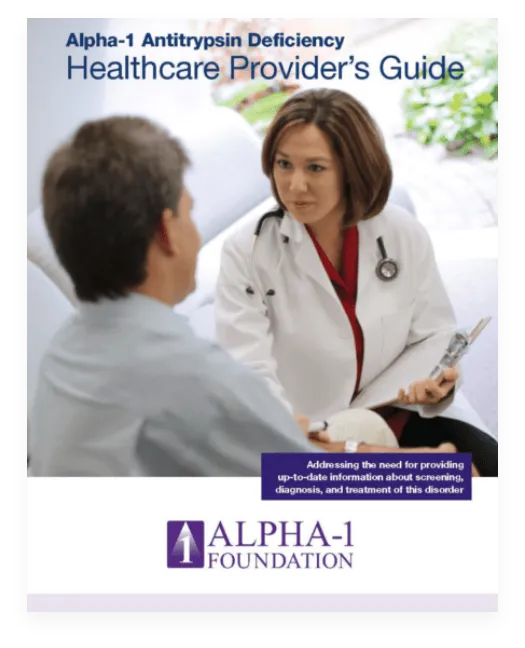
20 pages
DOWNLOADXX pages
DOWNLOAD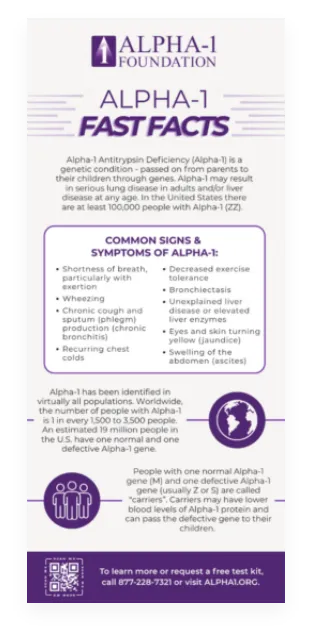
2 pages
DOWNLOAD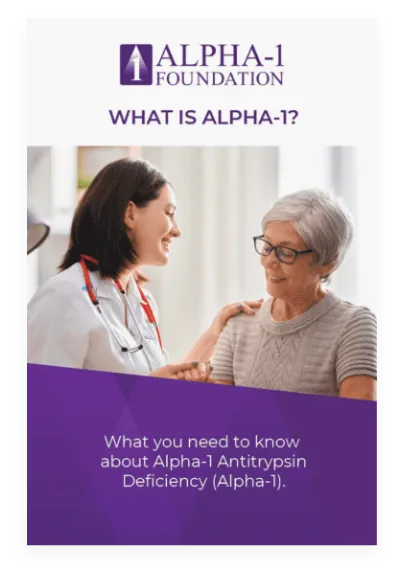
12 pages
DOWNLOAD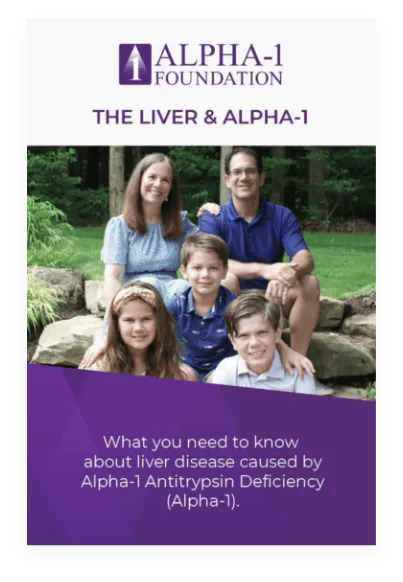
10 pages
DOWNLOAD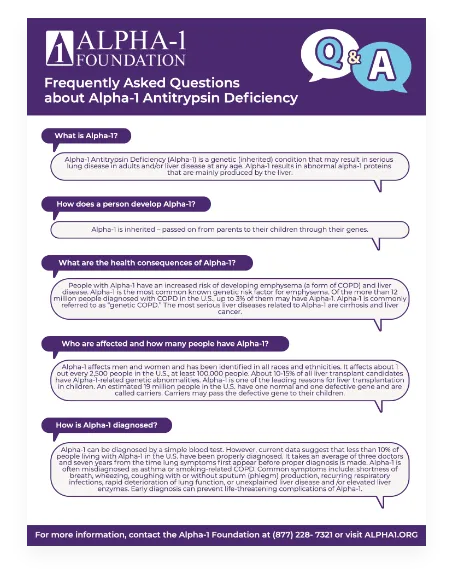
2 pages
DOWNLOAD14 pages
13 pages
TK pages
5 pages
12 pages
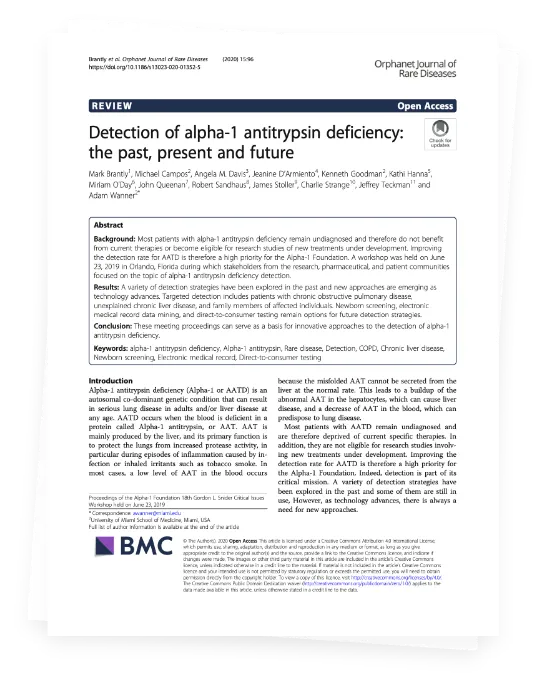
9 pages
10 pages
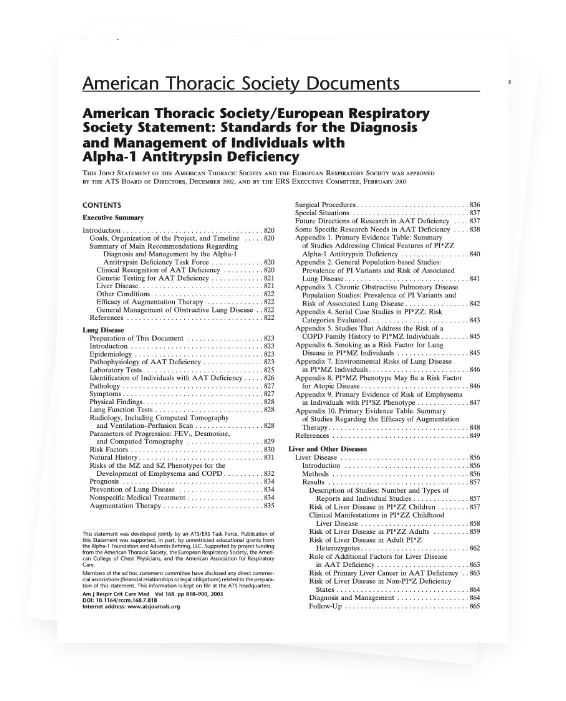
ATS/ERS: Clinical Standards Statement
80 pages
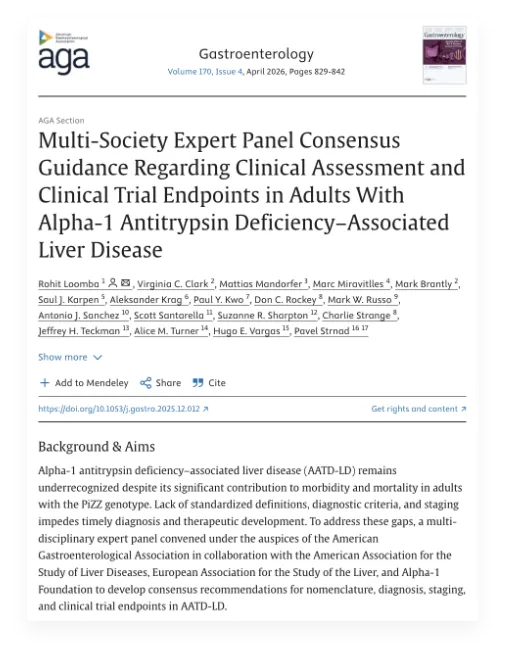
AGA: Multi-Society Consensus Guidance
14 pages
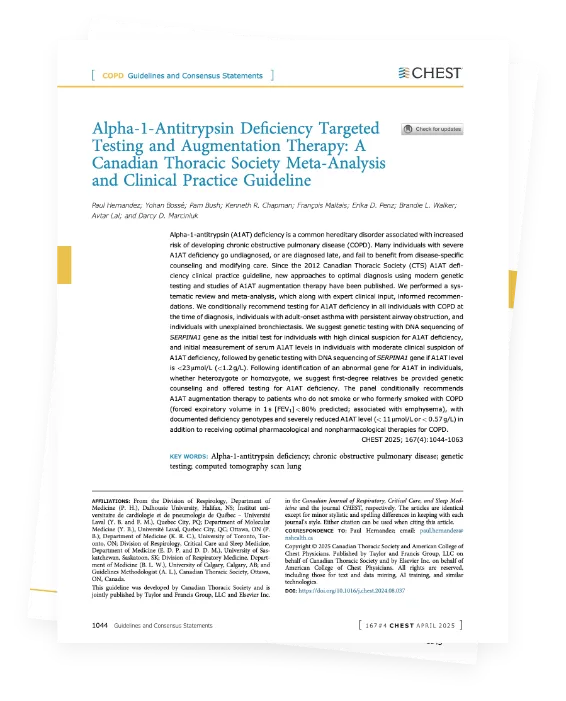
CHEST: Evidence-Based Clinical Practice Guideline
8 pages
EASL: Clinical Practice Guideline
14 pages
GOLD: COPD Strategy Report
248 pages